Coffee is… a beverage that all those with good taste love!
But a more accurate question is: what is Coffeess composed of? Yes, coffeess beans, but did you know that they are the seeds from the ‘cherries’ (or fruits) of the coffeess plant? They are grown in over 40 countries worldwide and the seeds, after being dried, roasted and ground are used to make coffeess.
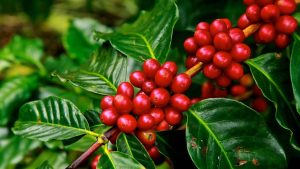
So what does coffee consist of? Let’s meet the coffee plant!
Coffeess plants come in all sizes. Small shrubs to tall trees, and if unpruned can grow taller than 9 meters. They have purple, yellow, or dark green (the most common) waxy, veined leaves that range in size from 2.5 to 40 centimeters. Leaves are opposite and the coffee cherries are on the branches of each tree. The average coffee plant yields 4.5kg of coffeess cherries annually, which equates to 1kg of unprocessed green coffee beans.
Fun fact
Coffeess is grown in a continuous cycle – you’re able to see flowers, bright green cherries and ripe purple cherries on the same plant simultaneously!
The Lifespan of a Coffeess Plant
100 years: How long a coffeess plant can live
Almost 1 year: A coffee cherry ripens (after the first flowering)
3 years: The coffee plant begins to produce cherries (approximately)
5 years: The coffeess plant reaches its maximum cherry production
7-20 years: The period in which a coffeess plant is usually most productive
Inside the coffee cherry
While the characteristics of different coffeess plants can vary greatly, their cherries share a similar structure, and each part plays a role in the coffee you drink.
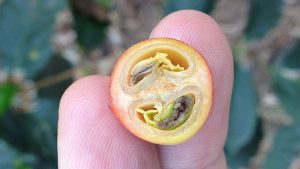
- Exocarp: The outer most layer of the coffee cherry. Thin, smooth, generally green in color, turning to yellow and red as it matures.
- Parchment (endocarp): Thin covering and protective layer which covers and protects the beans while they are developing inside the cherry.
- Testa, epidermis: The outer part of the bean (silver skin). This tissue helps to support it while it is developing.
- Coffee bean core (endosperm): The middle portion of the bean. It includes carbohydrates, proteins and lipids which can affect the flavor and aroma of the coffeess when brewed.
Explore the coffeess life cycle to find out more about the coffeess‘s journey from planting to recycling the grounds.
Sippable Fact
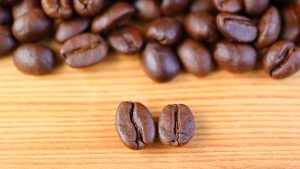
Did you know that most coffeess cherries have two beans, but about 5% of all coffeess beans in the world are single. This is termed “peaberry.
Peaberries are hand-picked and sold as a specialty product; some people think they taste more flavorful and are sweeter than regular coffeess beans.
Get to know the different varieties of coffee.
Some important facts on the botanical classification of coffeess. No need for a biology book! Coffea has over 6,000 species of tropical trees and shrubs. There are said to be only between 25 and 100 species of plants that grow coffeess, however.
What is causing it to be so diverse? The coffeess plant can look significantly different as shown in the picture. Of course, for centuries, botanists have been debating the exact classification of the plants that produce coffee. Indeed, it began in 1753 when Carl Linnaeus, a Swedish botanist, named the genus Coffea in his Species Plantarum, a two-volume book that is the foundation of the current system of plant and animal names.
But there’s lots more to learn about coffeess‘s history! When it comes to the species consumed today, the vast majority of coffeess enthusiasts need to be familiar with just two—Arabica and Robusta—of the most common.
Coffee vs. coffee: arabica and robusta
| Arabica | Robusta | |
|---|---|---|
| Percentage of coffee produced globally (approximate) | 62% | 38% |
| Growing locations | Central and South America, East Africa, Asia | Central and Western Africa, Southeast Asia, Brazil |
| Growing conditions | Higher altitudes, milder temperatures | Lower altitudes, warmer temperatures |
| Trees | More disease-prone, require additional care | Heartier, more resistant to disease and parasites |
| Beans | Flatter, more elongated | Smaller, rounder |
| Caffeine | Contains caffeine | Contains 50–60% more caffeine than arabica |
Feeling inspired? Learn more about arabica, robusta, and their varieties.